


About Us
UUDAM MONGOL SCHOOL 3.0
Uudam Mongol School's 2026–2031 strategic development plan.
Strategic Plan
Planning our next stage of growth, not leaving it to chance
Over the next five years, Uudam Mongol School is working to carry out a strategic plan comprising 39 strategic initiatives. We introduced the direction, goals, and plan of our school’s development to all parents and guardians last spring, and shared it further through our official page over the summer, in a series of posts.
Below, we present the 26 strategic goals we are sharing publicly, organized under three pillars.
Moving the content, quality, and outcomes of our academic program onto a measurable footing.
Improving, in stages, the quality of the everyday environment our students spend their time in.
Investing steadily in the professional development of our teachers and staff.
These are the three foundational pillars of our institution — the areas in which we are planning major renewal.
Curriculum
Renewing Our Curriculum
The curriculum is the core of everything a school does.
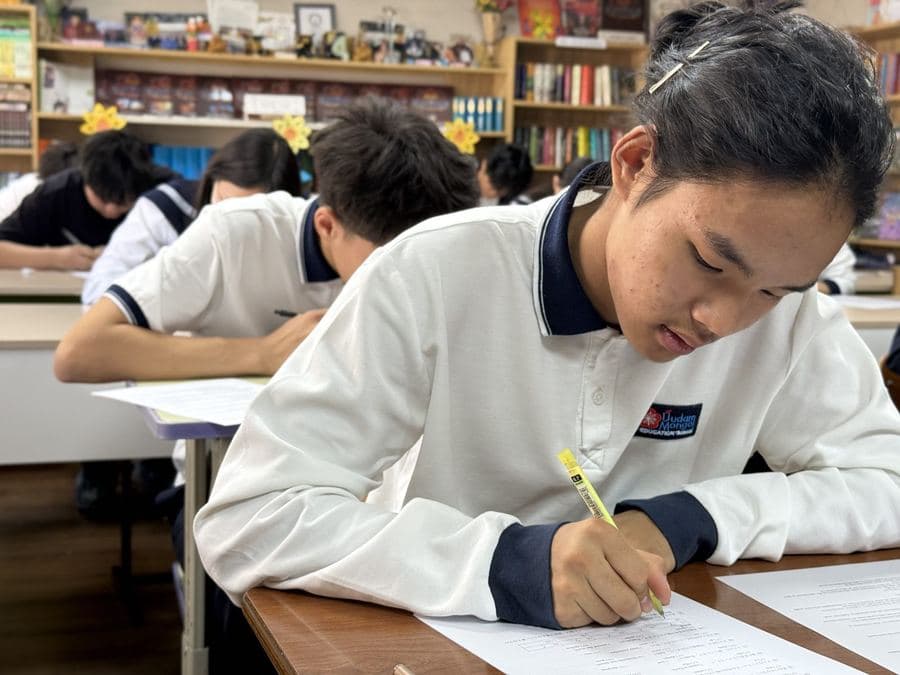
Since our founding, we have enriched and delivered Mongolia's national core curriculum to fit our own learning environment and resources, while steadily developing specialized Japanese-language instruction. Building on this foundation, we are now beginning a curriculum renewal aimed at the next stage of our development — a new level of academic quality.
As part of this renewal, we are paying particular attention to foreign-language instruction — the area most in demand today — moving it toward a more outcome-driven, graduated system that develops students' practical, real-world language ability. Alongside this, we are setting out to improve the quality of mathematics instruction, the foundation of the sciences, and to introduce, in stages, methods that systematically build students' logical thinking and problem-solving skills. We are also re-assessing curriculum delivery, teaching methods, and student progress at every level, and defining the metrics and outcomes we will measure against.
In parallel, we plan to improve homework management to support independent learning, move primary-school teaching in stages toward a subject-specialist model, and implement an integrated plan to prepare middle- and high-school students for the general entrance exam. The goal of this curriculum renewal is to shape every student into someone who not only holds knowledge, but can think critically, keep developing themselves, apply what they know in life, and act with the right attitude.
12 strategic goals
- 01Refine the core curriculum's academic plan
- 02Move primary-school teaching to a subject-specialist teacher model
- 03Become a nationally leading school for the quality of mathematics instruction
- 04Become a nationally leading school for the quality of English instruction
- 05Become a nationally leading school for the quality of Japanese instruction
- 06Strengthen the human-resource capacity behind foreign-language instruction
- 07Establish a renewed approach to managing homework load
- 08Implement a lighter-backpack program
- 09Expand the primary curriculum with additional development hours
- 10Build a structured system for developing social participation and responsibility
- 11Introduce research- and experimentation-based teaching methods into the curriculum in stages
- 12Renew and implement our preparation program for the national university entrance exam
Learning Environment
Renewing Our Learning Environment
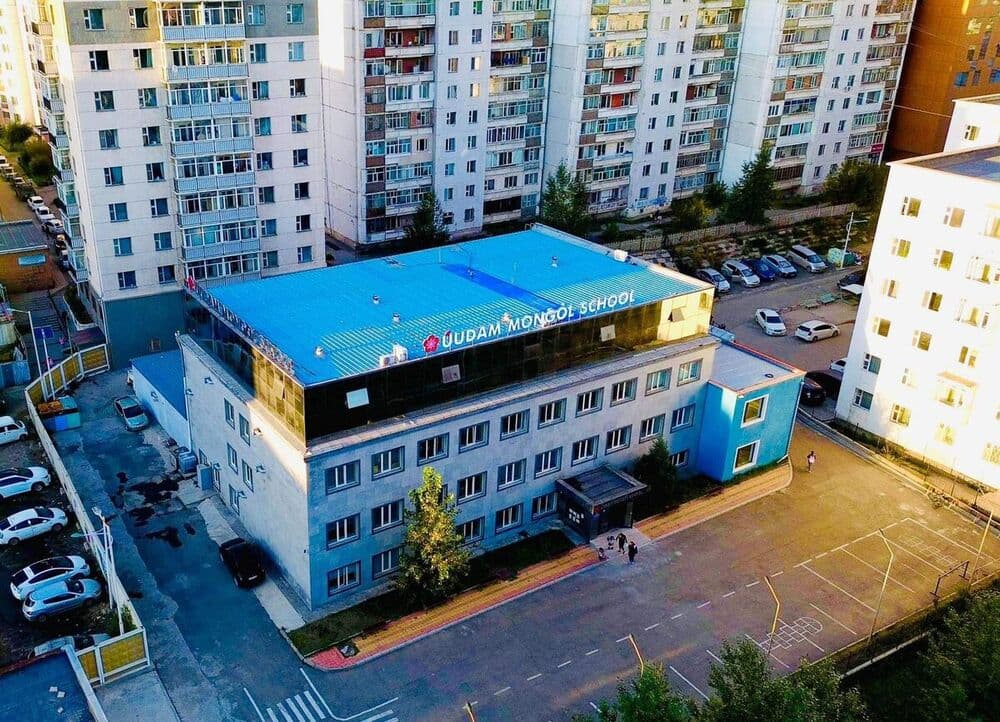
Within our own campus, we plan to carry out maintenance and improvement work in stages to support day-to-day instruction, and to comprehensively address lighting and ventilation in every classroom. Lighting standards and clean air directly affect students' eyesight, concentration, and productivity — for us this is not a minor repair, but a basic condition for academic quality. We are also paying close attention to improving classroom layout and seating so every student has an environment that supports focus and learning.
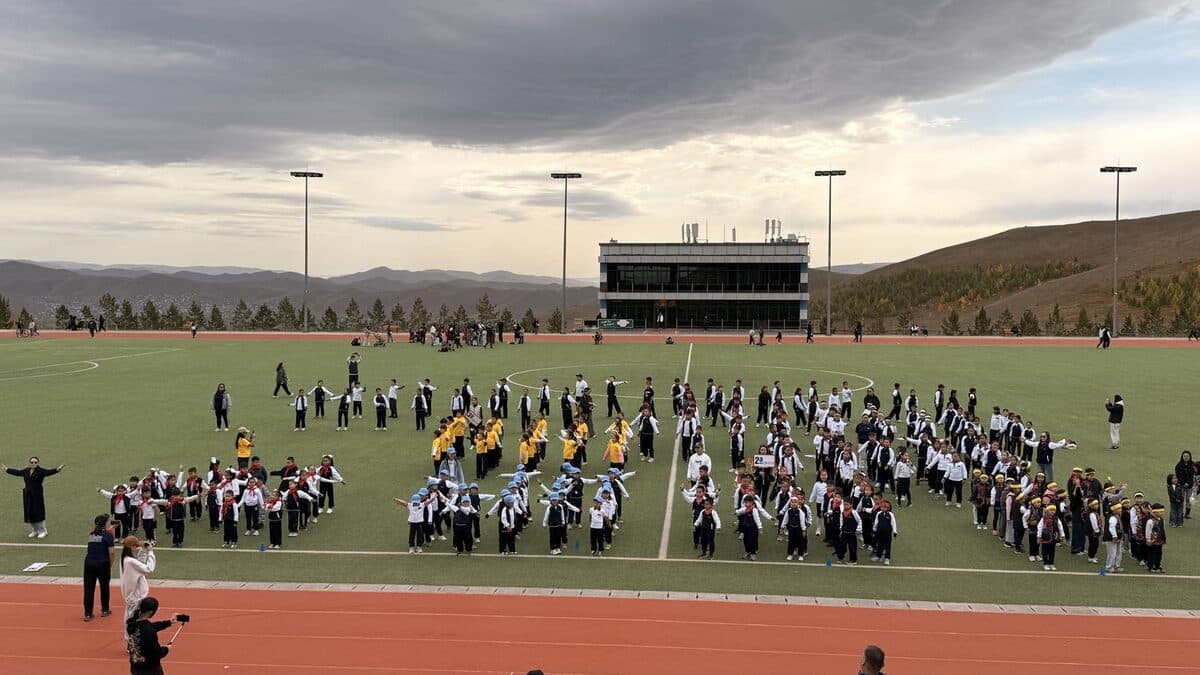
At the same time, as part of our medium- and long-term development plan, we have begun design work on a gymnasium and a classroom-building extension. A gymnasium is not only for physical-education classes — it is an important environment for building teamwork, discipline, and team culture among students, so it is being planned to meet proper standards and support a wide range of activities. The classroom-building extension will increase our classroom capacity and allow us to organize instruction more efficiently.
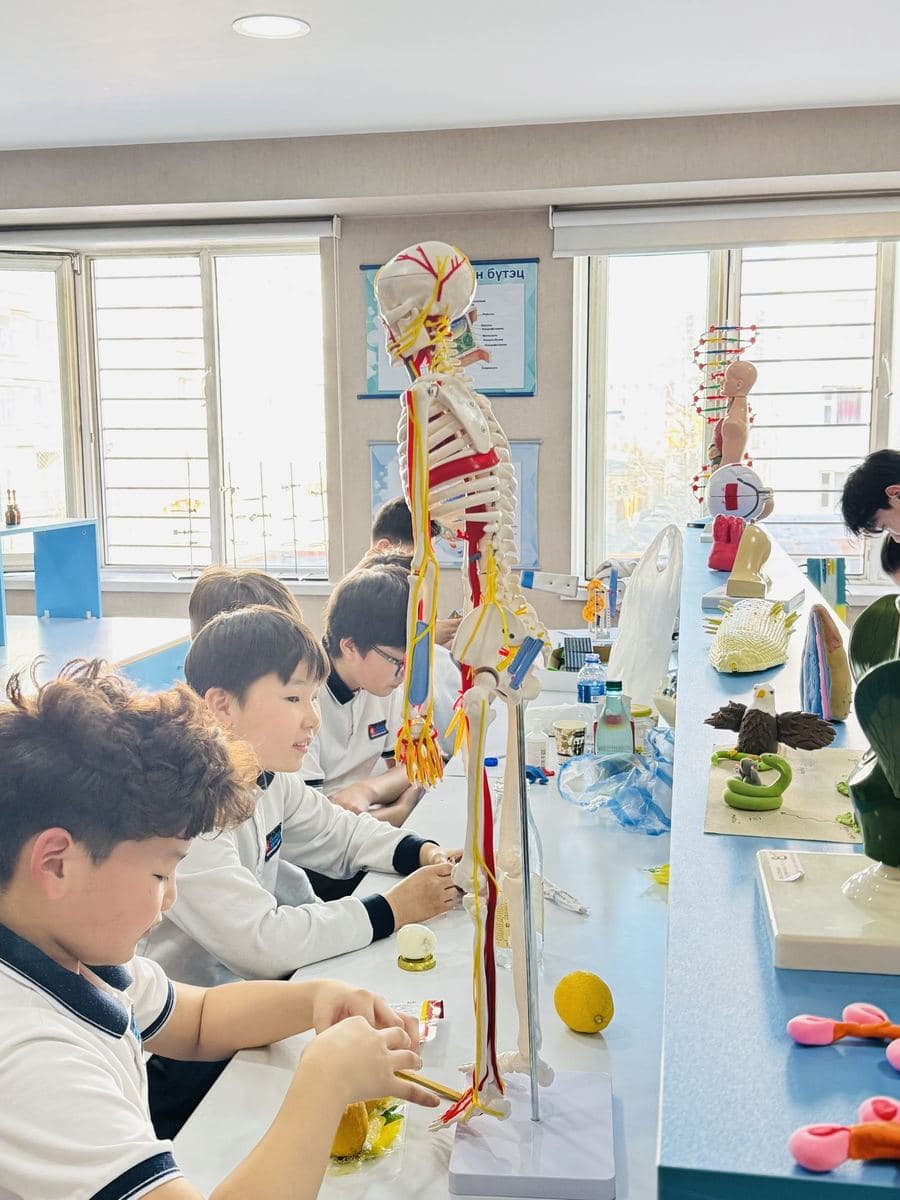
Once the environment renewal and expansion are fully carried out, the quality of instruction, sports, and extracurricular activities will improve noticeably. Grades 1–4 will be able to study without shift scheduling, and every student having their own fixed classroom and storage space will ease the daily burden — a real solution, in particular, to lightening the load young students carry in their backpacks. Adding laboratories and purpose-built rooms in stages will also expand experiment- and practice-based learning, giving students more opportunity to put their knowledge into practice and bringing real, sustained improvement to instructional quality.
6 strategic goals
- 01Renovate sound insulation, lighting, and ventilation in every classroom
- 02Build a learning environment that supports a wider range of sports
- 03Create the conditions for primary classes to run without shift scheduling
- 04Increase the number of classrooms available for review sessions and experiments
- 05Introduce digital and interactive teaching tools and methods into the curriculum in stages
- 06Build a digital learning environment and the technology infrastructure to support it
Life Education
Our Life Education Program
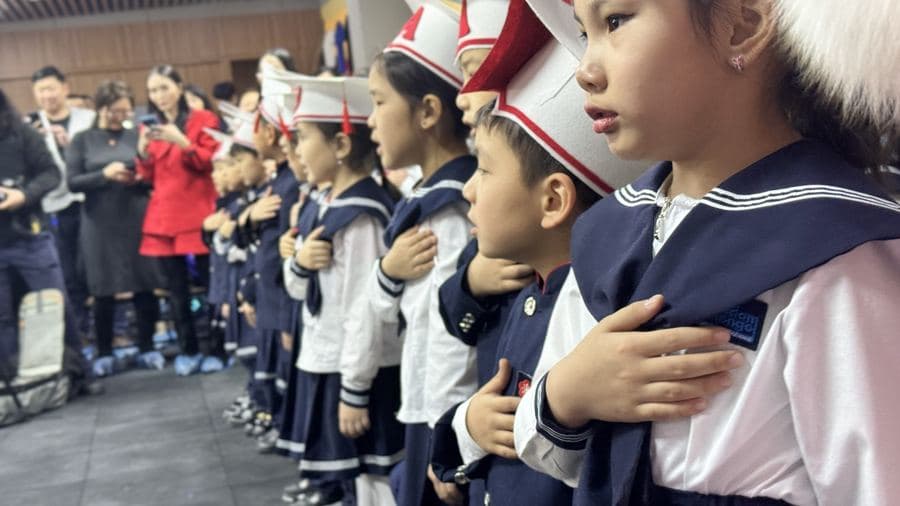
Life Education is an integral part of our academic policy. Since our founding, we have worked to shape students into people of good character through daily activities, school culture, and habits. Since 2024, we have aligned this work more closely with our core philosophy, developing it in a more structured, purposeful way and introducing it in stages as its own standalone program: Life Education.
Through this program, we aim to shape students who are not only academically capable, but able to carry themselves through life with the right attitude. We have identified the knowledge and skills essential to everyday personal life and built them around our school's emblem, the "Eight Life Skills": health, communication, psychology, finance, ethics, civic participation, digital literacy, and career planning — designed to be taught in graduated stages suited to students' age and development.
Starting next school year, we will formally introduce this program during class hours, delivering it as practical instruction that connects theoretical knowledge with habits and attitude. In connection with this, we have comprehensively planned the program's content, methodology, assessment system, and teacher preparation, and defined the metrics we will measure implementation against in our strategic plan. Through this program, students will grow into independent individuals who understand themselves, respect others, participate constructively in society, and are able to plan their own future.
8 strategic goals
- 01Deliver practical health knowledge through the Life Education program
- 02Deliver practical communication knowledge through the Life Education program
- 03Deliver practical psychological knowledge through the Life Education program
- 04Deliver practical financial knowledge through the Life Education program
- 05Deliver practical ethics knowledge through the Life Education program
- 06Deliver practical civic-participation knowledge through the Life Education program
- 07Deliver practical digital-literacy knowledge through the Life Education program
- 08Deliver practical career-planning knowledge through the Life Education program
What “school development” means to us
For us, school development is a long-term effort to renew, together, the quality of student learning, teacher growth, parent involvement, the learning environment, institutional culture, accountability, and future direction.
We want to be a school that prepares every child not only for exams, but for life. We aim not merely to keep today’s school running, but to become, over the next five years, a school that is more capable, more stable, more accountable, and more child-centered.
What implementation depends on
None of these goals is work that will be fully completed in a single day or a single quarter. Implementation depends on many factors — financial capacity at the time, staffing, the condition of our facilities, the regulatory environment, partnerships, and the support of parents.
What we can say clearly is this: our school is committed to pursuing its next stage of development not by chance, but grounded in clear goals, measurable indicators, staged planning, and open information.
A Note on Implementation
This strategic plan sets out Uudam Mongol School's goals and direction for the coming five years. It is an internal policy document, not marketing or promotional material.
To carry out the goals and initiatives set out in this plan, our school team will work to fully mobilize our own resources, people, and financial capacity, guided by a principle of continuous improvement.
This strategic plan should not, however, be understood as a guarantee that will certainly be fulfilled, nor as a legally binding commitment — we note explicitly that implementation may change depending on external and internal conditions, opportunities, and resources.
We therefore encourage parents and guardians to base any decision not solely on this document, but on a comparison with other schools and on their own independent, considered judgment of what fits their needs and values.
Our Campus
Where This Strategy Takes Shape