


Under its medium-term strategic plan “UUDAM MONGOL 3.0,” Uudam Mongol School has launched a number of reforms in Curriculum, Environment, and Human Resources.
One of these is the “Life Education” program, which aims to provide knowledge in eight strands needed in everyday life.
A distinctive feature of this eight-strand program is that, through content suited to each child's age and level, it develops the knowledge children need in everyday life into real choices, habits, and skills.
We aim to support each child in growing into a person who understands themselves, relates well to others, makes decisions independently, and acts responsibly.
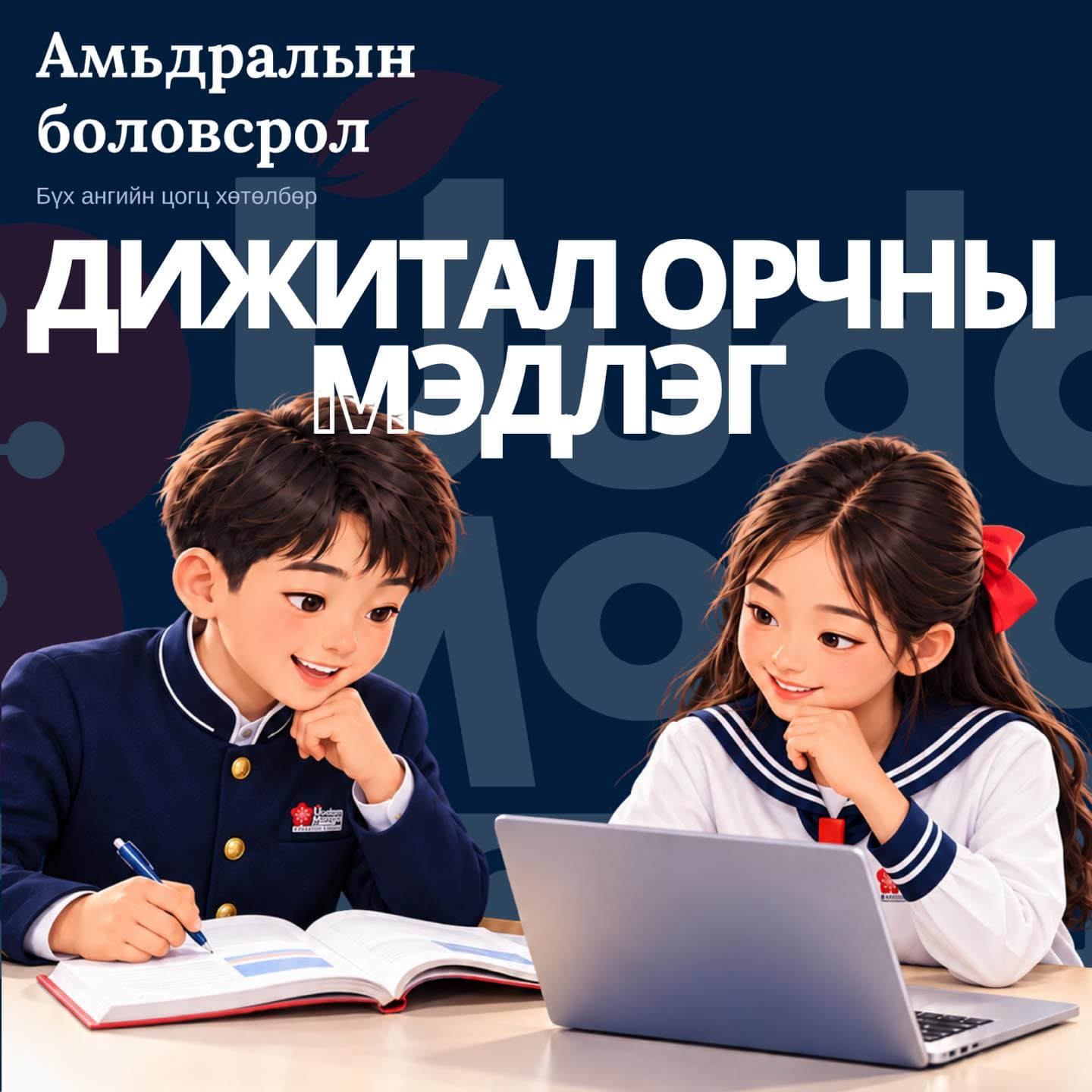
Digital Literacy
“Is everything I see on the screen true?”
Watching an interesting video, searching for information needed for a lesson, messaging a friend. The online environment has become part of children's everyday lives. It is important for them to learn to think about and choose what to learn there, what information to trust, and what to share with others.
Through content suited to their age and level, children learn to notice the sources of information and check whether it is accurate; to protect their own and others' personal information and passwords; to communicate respectfully online and ask for permission before sharing photos or information; to manage their screen use; and to ask a trusted adult for help when they come across something questionable or uncomfortable.
We aim to support each child in growing into a person who checks information before simply following it, respects their own and others' personal space, uses technology to learn and create, and takes part responsibly in the online environment.
Choices made online also affect real life. At home, try checking a piece of information together with your child: “Who published this, and where? How can we check whether it is true?”